The Hills of Jerusalem
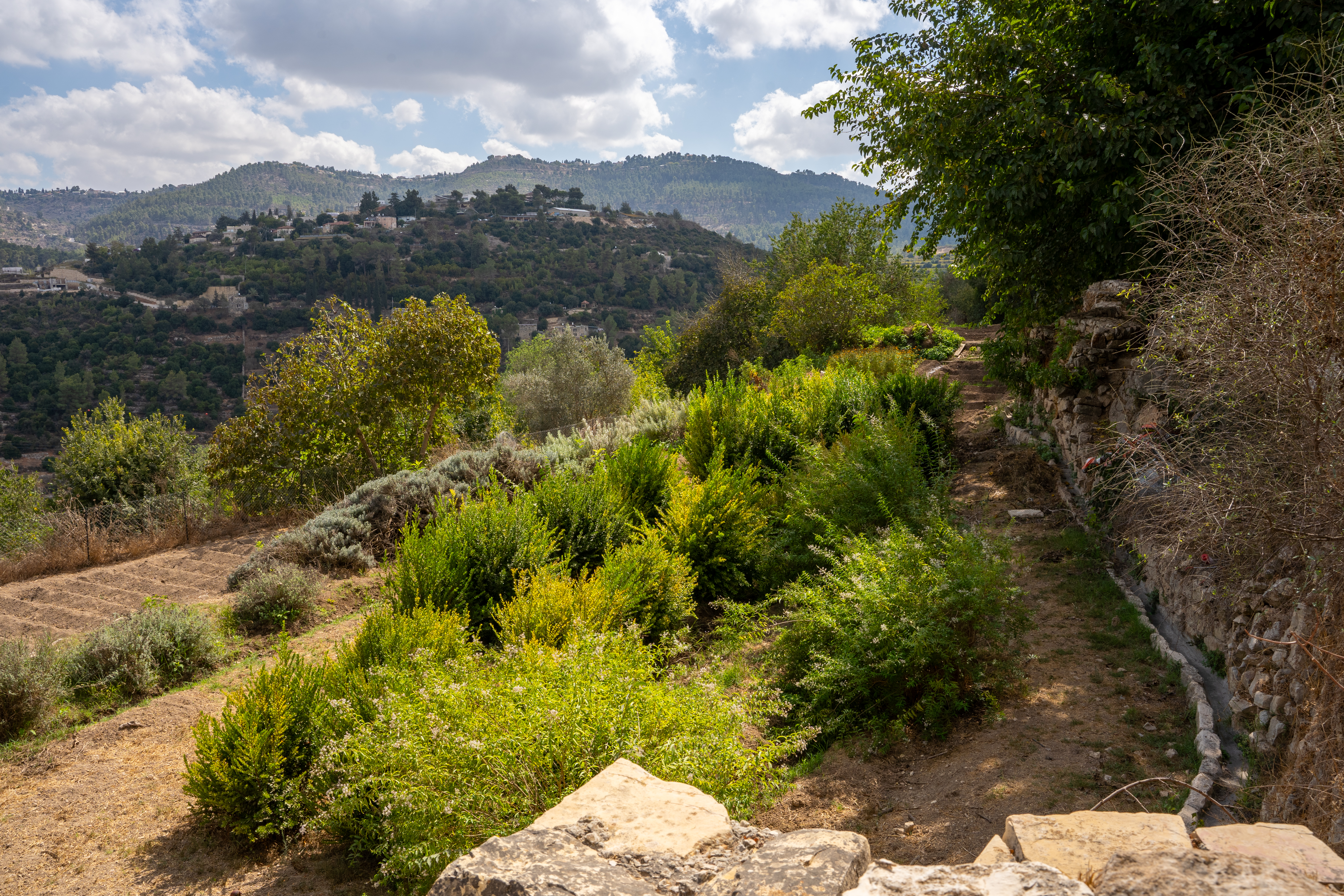
On the ridge of the Jerusalem hills ran one of the most important roads that crossed the land of Israel. The road was called the “Mountain Road” because of its location, but also the “Patriarchs’ Road.” It was traveled by the three patriarchs on their way to the Promised Land: Abraham, Isaac, and Jacob. The significant city on this route is Hebron, where the Patriarchs’ tombs are located in the Cave of Machpelah.
Ancient Agriculture
Along the road, you can still see the remnants of ancient agriculture. Some of the plots are still used by local farmers, mainly for grape cultivation, as well as vegetable farming. The stone terraces and agricultural plots are beautifully described in the Book of Isaiah, Chapter 5: A. “I will sing for my beloved a song about his vineyard. My beloved had a vineyard on a fertile hill.” B. “He dug it up and cleared it of stones and planted it with the choicest vines. He built a watchtower in it and also cut out a winepress. He looked for it to yield good grapes, but it yielded only bad fruit.”
Biblical Springs
On the mountain ridge and its slopes, there were very few springs. The underground water flowed with the rock layers either to the coastal plain or the Judean desert. To capture the water along its way, horizontal tunnels were dug into the rock to collect the dripping water and bring it out for irrigation on the mountain. “A garden locked is my sister, my bride, a spring enclosed, a fountain sealed” (Song of Solomon 4:12).